
Does Rain Wash Away Fertilizer?
Does Rain Wash Away Fertilizer in Sherman, Texas?
If you’ve ever fertilized your lawn and then watched a massive North Texas thunderstorm roll in, you’ve probably felt that "sinking feeling." Did you just watch your money wash down the storm drain?
In Sherman, rain is a double-edged sword. Because of our compacted clay soil, the line between "perfectly watered in" and "completely washed away" is very thin. Here is how to tell if the rain helped your lawn or hurt your wallet.
The Rainfall Threshold: Help vs. Harm
When Rain is a Friend (The Activation Phase)
Fertilizer needs water to work. Granules are essentially useless until they dissolve and travel down to the root zone.
- The Sweet Spot: 0.25 to 0.5 inches of steady, light rain.
- The Result: This is perfect. It dissolves the granules and moves the nitrogen into the top few inches of the soil where the roots can "eat" it.
When Rain is a Foe (The Washout Phase)
In Sherman, our "Gumbo" clay can only absorb water so fast. Once the top layer is saturated, everything else becomes runoff.
- The Danger Zone: 1.0 inch or more of heavy, driving rain (common in North Texas spring storms).
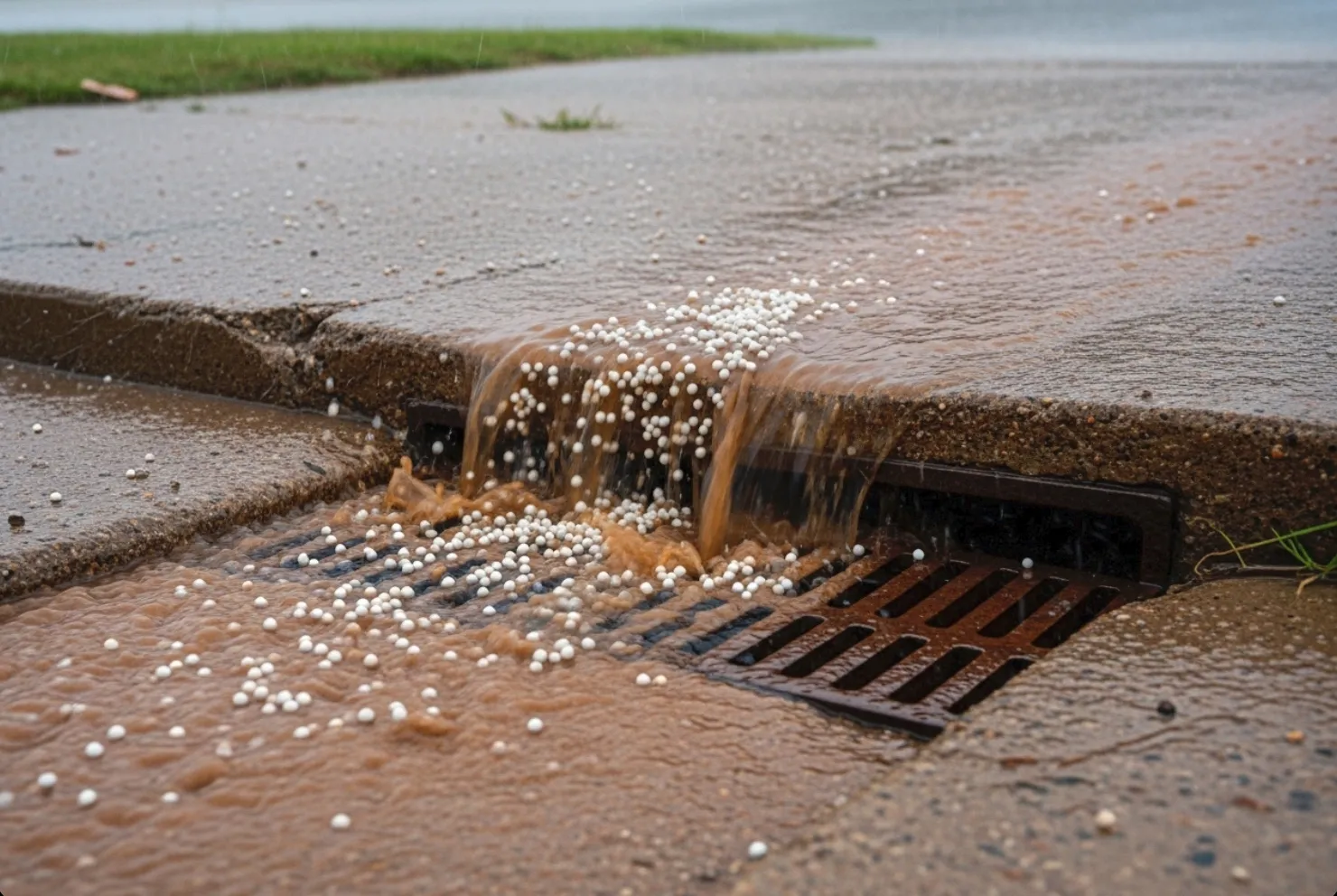
- The Result: The water moves across the surface of the hard clay rather than soaking in. It carries the fertilizer granules into your flower beds, the sidewalk, and eventually the Sherman storm drains.
Why Sherman’s Clay Soil Changes the Rules
If you lived in a sandy area (like East Texas), the water would soak in quickly. In Sherman, clay acts like a tapped-down road.
- Saturation Point: Once the clay is wet, it "seals." Any fertilizer applied right before a big storm to a wet lawn is almost guaranteed to wash away.
- The Slope Factor: If your yard has even a slight slope toward the street, heavy rain will sweep the fertilizer away before it can even begin to dissolve.
What to Do if a Storm Hits Right After Fertilizing
If you just finished fertilizing and it starts to pour:
- Don't Re-Apply Immediately: Wait 7 to 10 days. If the grass doesn't start to "green up" or if you see uneven patches, you may have lost some product.
- Check Your Flower Beds: Often, washed-away fertilizer ends up in your mulch or flower beds. If your flowers suddenly "explode" in growth while the lawn stays yellow, you’ve had a washout.
- Switch to Slow-Release: Professionals use slow-release sulfur-coated urea. These granules "stick" better and dissolve over weeks, making them much harder to wash away in a single storm.
FAQ: Rain & Fertilizer
Should I water my lawn if the forecast says it will rain tomorrow?If the forecast calls for a light rain, let nature do the work. If it calls for a "North Texas Special" (heavy thunderstorms and wind), it’s better to apply your fertilizer and water it in manually for 15 minutes today to lock it into the soil before the storm arrives.
Is liquid fertilizer safer from rain than granules?Actually, liquid can be more vulnerable. It needs about 2–4 hours to dry on the leaf (foliar intake). If it rains 20 minutes after a liquid application, the product will be washed off the plant entirely.
How soon after rain can I fertilize?Wait until the standing water is gone and the soil is no longer "mushy." Applying fertilizer to a water-logged lawn is a recipe for runoff.
Explore other Article
Discover other blogs related to the topic you read.


Ready To Make Your Lawn Look Brand New?
Contact us today to schedule a free estimate for your lawn care or call us to learn more about lawn care for your property