
Fertilizer Burn Signs and Fix
Fertilizer Burn Signs and Fixes for Lawns in Sherman, Texas
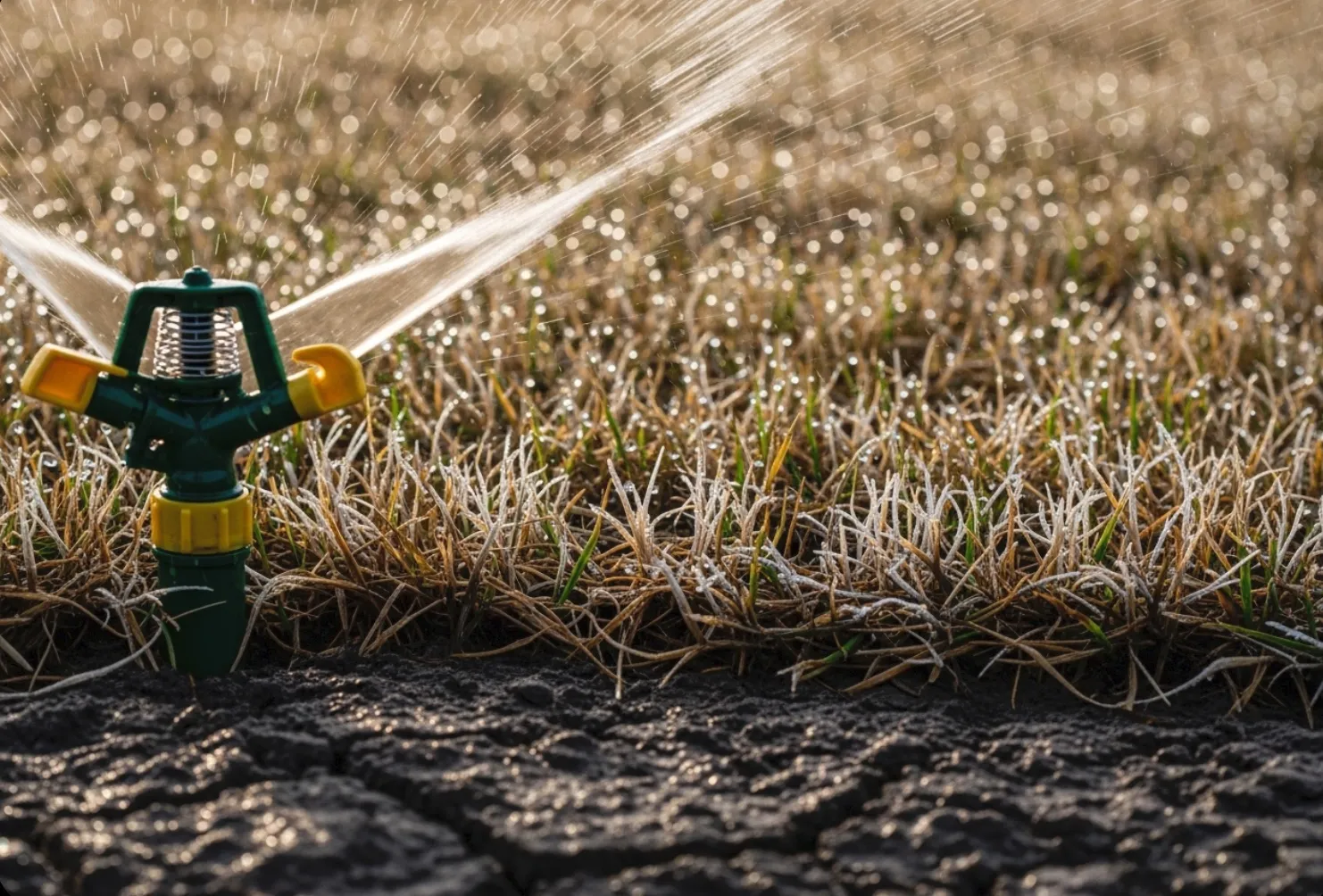
Fertilizer burn is essentially a "salt overdose" for your grass. Because most fertilizers contain mineral salts, applying too much draws moisture out of the grass blades and roots, leaving them dehydrated and scorched.
In Sherman, the combination of triple-digit heat and compacted clay soil creates a "pressure cooker" effect that makes fertilizer burn happen faster and last longer. If you suspect you've over-applied, here is how to identify and fix the damage.
How to Spot Fertilizer Burn
Damage usually appears within 24 to 72 hours of application. Look for these specific patterns:
- Spreader Streaks: Long, brown or yellow stripes that follow the exact path you walked with your spreader.
- White Tips: The tips of the grass blades turn white or light tan and feel "crispy" or brittle to the touch.
- The "Edge Burn": Brown patches concentrated near sidewalks or driveways where fertilizer often "piles up" during a turn.
- Sudden Yellowing: A rapid shift from green to a dull, sickly yellow across large sections of the yard.
The 3-Step Emergency Fix
If you catch the burn early, you can often save the roots even if the blades turn brown.
Step 1: The "Heavy Flush"
You must dilute the nitrogen salts immediately. Water the affected area deeply for 30 to 45 minutes every morning for at least 3-5 days. In Sherman’s clay soil, you want to avoid puddling, so water until the ground is saturated but not washing away.
Step 2: Stop All Chemicals
Do not apply weed killers, fungicides, or more fertilizer to "fix" the color. Your lawn is in shock; adding more chemicals is like putting salt in a wound.
Step 3: Raise the Mower Deck
Stop mowing the damaged area if possible. If you must mow, set your deck to the highest possible setting. You want to keep as much green leaf as possible to help the plant photosynthesize and recover.
Fertilizer Burn vs. Drought Stress
It’s easy to confuse these in North Texas. Here is how to tell them apart:
FeatureFertilizer BurnDrought StressOnsetSudden (1–3 days after treatment)Gradual (weeks of no rain)PatternStripes, patches, or "spreader paths"Large, uniform areas or "hot spots"Leaf TextureBrittle, white/tan tipsWilted, folded, or "bluish-gray" tintRecoveryNeeds flushing to dilute saltsNeeds deep watering to hydrate
When to Call a Professional
If the grass is still brown after three weeks of heavy watering, the roots have likely been chemically scorched. At this point, the "fix" involves:
- Core Aeration: To break up the salt-heavy clay.
- Soil Conditioning: To rebalance the pH.
- Sod Replacement: Removing the dead sections and installing fresh turf.
Explore other Article
Discover other blogs related to the topic you read.


Ready To Make Your Lawn Look Brand New?
Contact us today to schedule a free estimate for your lawn care or call us to learn more about lawn care for your property