
The Complete North Texas Weed Identification Guide for Homeowners in Sherman, TX
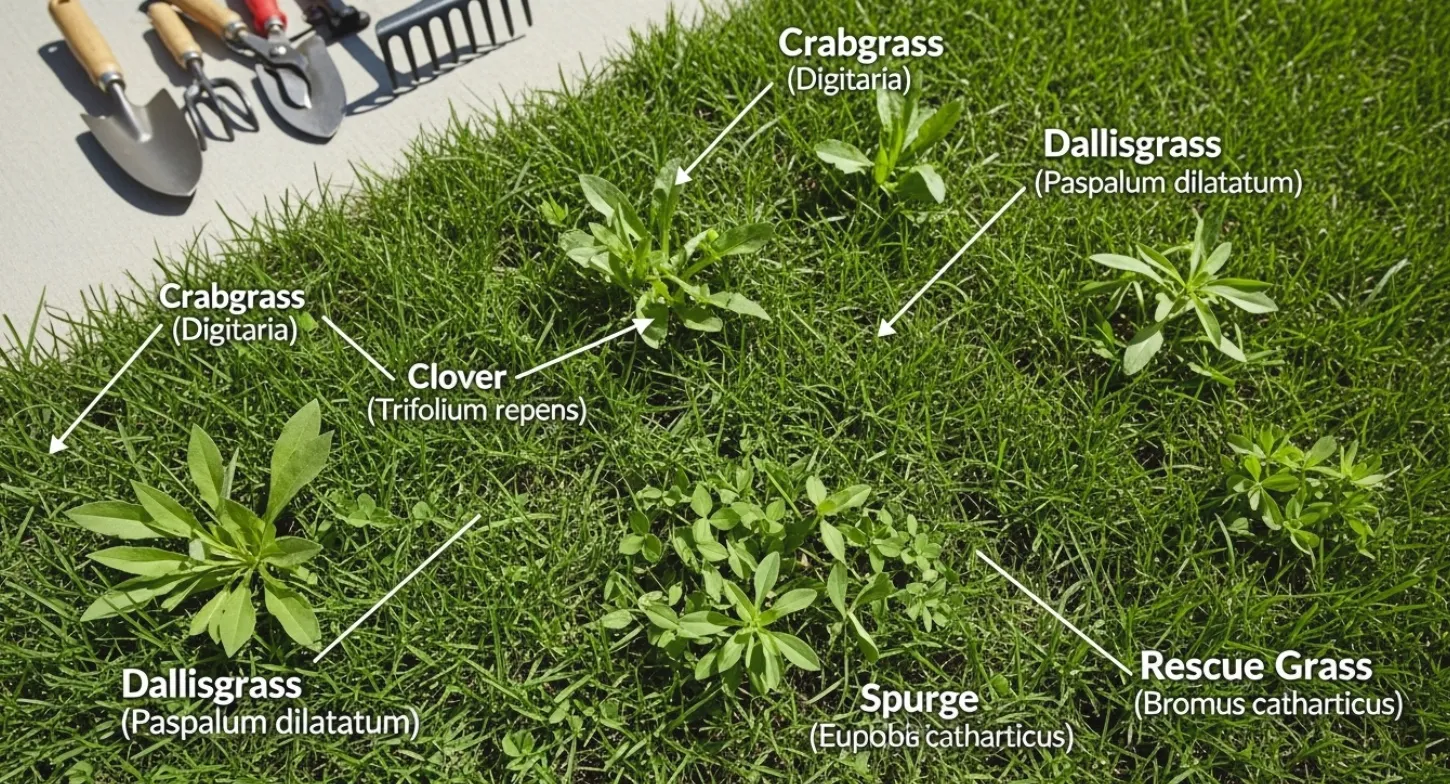
A Practical Guide to Weed Identification & Control in Sherman, TX
If you live in Sherman or anywhere in North Texas, you’ve probably noticed that lawn weeds don’t behave like they do in other parts of the country. They grow aggressively, spread quickly, and often return no matter how much you mow or water.
This guide exists to solve that frustration. It is a homeowner-focused, practical resource designed to help you:
- Identify the weeds invading your lawn.
- Understand why they keep appearing.
- Learn what actually works in North Texas clay soil and weather.
- See how weed control connects to fertilization, mowing, soil health, and long-term lawn planning.
Weed control isn’t about spot-spraying—it’s about understanding the system your lawn is operating in. If you are ready to stop guessing and start seeing results, get a free estimate today.
What Is Weed Identification & Why It Matters in North Texas
Weed identification means determining exactly which weeds are present before attempting to control them. In North Texas, this step is critical.
Why Identification Matters in Sherman
- Many weeds look similar but require opposite treatments.
- Some weeds only respond to pre-emergent, others only to post-emergent.
- Timing matters more than product strength.
- Store-bought solutions often fail because the weed wasn’t identified correctly.
Misidentification leads to wasted money, repeated applications, and lawns that never improve. This is also why weed control and fertilization must work together. Killing weeds without improving turf density almost guarantees they’ll return.
The North Texas Context: Why Weeds Thrive Here
North Texas lawns face conditions that actively favor weeds:
- Heavy clay soil with poor drainage.
- Extreme temperature swings.
- Long weed growing seasons.
- Drought stress followed by heavy rain.
- Thin turf caused by heat and compaction.
These conditions allow weeds like crabgrass, dallisgrass, rescue grass, spurge, clover, and broadleaf invaders to dominate. Weed pressure is rarely a sign of neglect—it’s usually a sign of soil imbalance or turf stress. If you suspect soil issues are holding your lawn back, contact us for a professional assessment.
Pros & Cons of Weed Control Approaches in Sherman, TX
DIY Weed Control
Many homeowners start with DIY because it feels accessible.
Pros
- Lower upfront cost.
- Immediate access to products.
- Hands-on involvement.
Cons
- High failure rate due to poor timing.
- Frequent weed misidentification.
- Limited product strength.
- No soil correction.
- Higher long-term costs due to repeated failures.
Sherman-specific tip: Clay soil stays cooler longer in spring. Applying pre-emergent based on calendar dates instead of soil temperature is one of the most common DIY mistakes.
Professional Weed Control
Professional programs are built around prevention, turf health, and local conditions.
Pros
- Licensed products & calibrated equipment.
- Accurate weed identification.
- Integrated fertilization plans.
- Seasonal, soil-temperature-based timing.
- Long-term weed suppression.
Cons
- Requires patience.
- Needs seasonal consistency.
Sherman-specific insight: Professionals often use split pre-emergent applications to manage unpredictable spring weather—something most DIY plans miss. If you want professional results without the hassle, get started now.
How Weed Control Actually Works (Step-by-Step)
Step 1: Weed Identification Comes First
Different weeds require different strategies:
- Broadleaf vs. grassy weeds.
- Annual vs. perennial weeds.
- Soil-indicator weeds.
- Common mistake: Applying a generic product without knowing what you’re targeting.
Step 2: Post-Emergent Weed Control
- Targets active weeds.
- Requires proper temperature and growth conditions.
- Often needs repeat applications.
- Note: Post-emergents do not prevent future weeds.
Step 3: Pre-Emergent Weed Control
- Stops weed seeds from germinating.
- Spring = summer weeds.
- Fall = winter weeds.
- Soil temperature matters more than the calendar date.
Step 4: Fertilization Strengthens Turf
Healthy grass crowds out weeds naturally.
- Correct nutrients = denser turf.
- Over-fertilizing = stress and burn.
- Timing must match your grass type.
Step 5: Mowing & Watering Must Support Treatments
- Mowing too short exposes soil to weed seeds.
- Shallow watering favors weeds over grass.
- Mowing immediately after treatment reduces effectiveness.
Common North Texas Weeds & What They Indicate
Crabgrass
- Indicates: Thin turf, missed pre-emergent, short mowing.
- Key mistake: Trying to kill it instead of preventing it.
Clover
- Indicates: Nitrogen deficiency, compacted soil.
- Insight: Clover is often a soil problem, not just a weed problem.
Dallisgrass
- Indicates: Long-term inconsistency, poor drainage.
- Reality: There is no one-application fix.
Spurge
- Indicates: Drought stress, shallow watering.
Rescue Grass
- Indicates: Missed fall pre-emergent.
- Key insight: Winter weeds are usually a fall timing issue.
Fertilization’s Role in Weed Prevention
Fertilizer doesn’t kill weeds—it prevents them by strengthening turf.Key rules:
- Timing > product.
- Over-fertilizing causes damage.
- Under-fertilizing invites weeds.
Why Lawns Still Look Bad After Treatments
Common causes include unrealistic expectations, weather interference, soil compaction, and irrigation mistakes. Real change takes time and consistency.
Weed Control Timing & Weather Impact
Rain, heat, and cold fronts directly affect results. A professional applicator monitors these conditions to ensure treatments are effective.
Pet Safety & Lawn Treatments
Modern professional treatments are safe when applied correctly by licensed technicians who follow strict safety protocols.
Lawn Appearance, Home Value & Selling
A weed-filled lawn hurts curb appeal and perceived value. A clean, green lawn signals a well-maintained home.
Choosing the Right Lawn Care Company in Sherman
Look for:
- Licensed applicators.
- Transparent programs.
- Education-first approach.
- Consistent scheduling.
Avoid:
- One-size-fits-all plans.
- Instant-perfection promises.
Conclusion & Call to Action
Weed problems in North Texas are rarely solved with a single product or treatment. They’re solved through correct identification, precise timing, soil awareness, and long-term turf health.
If you’re tired of mowing without results and want a lawn that actually improves year after year, professional weed control and fertilization is often the turning point. This guide reflects real Sherman conditions—not generic national advice.
Next step:Request a professional lawn evaluation or contact us to start building lasting results instead of chasing weeds.
Explore other Article
Discover other blogs related to the topic you read.

Ready To Make Your Lawn Look Brand New?
Contact us today to schedule a free estimate for your lawn care or call us to learn more about lawn care for your property