
Complete Weed Control Guide for North Texas Lawns

Complete Weed Control Guide for North Texas Lawns

If you are dealing with weeds in your lawn in Sherman, Denison, or nearby North Texas communities, you are not alone. For many homeowners, weeds are the most frustrating part of lawn care. You mow regularly, water when you can, and still end up with a lawn that looks thin, patchy, and overrun. The problem is not usually effort. The problem is that weed control in North Texas is more strategic than most people realize.
A great lawn is not built by reacting to weeds after they show up. It is built by understanding what weeds are in your yard, why they keep coming back, how they spread, and what steps actually stop them long term. That is where most DIY approaches fall apart.
At NTX Turf Management, weed control is not just about spraying what is visible. It is about building a lawn that stays thick, healthy, and resistant to future weed pressure. That means proper timing, pre-emergent and post-emergent treatments, strong fertilization, and strategies tailored to North Texas clay soil and weather conditions.
In this guide, you will learn how to identify common weeds, why they return, how they spread, when to treat them, and why professional weed control usually outperforms store-bought options.
Why weed control is harder in North Texas
North Texas lawns deal with a combination of challenges that make weeds especially aggressive. The long growing season gives weeds more time to germinate and spread. Heavy clay soil creates conditions where turfgrass often struggles while certain weeds thrive. Strong winds, spring storms, and disturbed soil in growing neighborhoods all add to the problem.
That is why homeowners in this area often feel stuck. They are not dealing with a random weed problem. They are dealing with a system that favors weed growth unless the lawn is managed correctly.
If your goal is a healthier lawn overall, not just fewer weeds, it helps to start with a full <a href="https://www.ntturfmanagement.com/services/lawn-care">lawn care program</a> rather than isolated treatments.
The most common weeds in North Texas lawns
The first step in weed control is accurate identification. Different weeds respond differently to treatment, and using the wrong product at the wrong time is one of the biggest reasons DIY efforts fail.
Broadleaf weeds
Broadleaf weeds are some of the easiest to spot because they do not resemble turfgrass. They usually have wide leaves, low growth habits, and can spread quickly across thin or weak areas of the lawn.
Common broadleaf weeds in North Texas include:
- Dandelions
- Clover
- Henbit
- Chickweed
- Dollar weed
- Thistle
- Spurge
- Virginia buttonweed
Dandelions are one of the most recognizable lawn weeds. They produce bright yellow flowers followed by white seed heads that spread easily in the wind. Their deep taproots make them difficult to eliminate without the right treatment.
Clover is another common frustration. It often spreads in low-growing patches and can signal that the lawn is not as dense or healthy as it should be. Clover control is not just about killing what you see. It also requires strengthening the turf so the lawn can compete.
If you want a deeper look at weed identification, read <a href="https://www.ntturfmanagement.com/post/common-north-texas-weeds-identification">common North Texas weeds identification</a> and <a href="https://www.ntturfmanagement.com/post/the-complete-weed-identification-guide-for-homeowners">the complete weed identification guide for homeowners</a>.
Grassy weeds
Grassy weeds are often harder for homeowners to identify because they look similar to lawn grass at first. By the time they stand out, they have often already spread.
Common grassy weeds include:
- Crabgrass
- Dallisgrass
- Annual bluegrass (Poa Annua)
Crabgrass is one of the biggest summer weed problems in North Texas. It grows in wide, coarse clumps and spreads aggressively once temperatures warm up. It is best controlled before it ever emerges.
Poa Annua is a winter annual weed that germinates in the cooler months, grows through winter, and leaves behind weak, patchy areas when it dies off later. That makes it especially frustrating because the damage shows up after the weed cycle is already underway.
How weeds spread in Sherman and surrounding areas
A lot of homeowners assume weeds appear because something went wrong on their own property. In reality, your lawn is constantly exposed to weed seeds from outside sources.
Wind
Many weeds produce lightweight seeds that travel easily in North Texas wind. Dandelions are a perfect example. A healthy-looking lawn can still get seeded from untreated properties blocks away.
Water runoff
Spring rains and storms move weed seeds across yards, down curbs, and into lawns. In Sherman’s clay soil, seeds often get trapped in cracks and low spots where they can germinate easily.
Pets and animals
Seeds can stick to paws, fur, and feathers. Dogs, squirrels, and birds all contribute to spreading weeds into otherwise clean lawns.
Lawn equipment
Mowers can spread weeds surprisingly fast. If a mower cuts through weeds that have already gone to seed, it can distribute those seeds across the entire property.
Neighboring properties
Weeds do not stop at property lines. Untreated lots and neighboring lawns can constantly reintroduce weed pressure to your yard.
For more on this, see <a href="https://www.ntturfmanagement.com/post/how-weed-seeds-spread-lawns">how weed seeds spread lawns</a>.
Why weeds keep coming back
This is one of the biggest questions homeowners ask. If a weed killer worked, why are the weeds back again a few weeks or months later?
The answer is that visible weeds are only part of the problem.
The seed bank in your soil
Most lawns contain thousands of dormant weed seeds in the soil. Killing the weed you see does not eliminate the seeds waiting below the surface. In North Texas clay soil, those seeds can remain protected for a long time until the conditions are right.
Thin grass gives weeds room to grow
Weeds are opportunists. They grow where turf is weak, thin, or stressed. If your lawn does not have density, sunlight reaches the soil and gives weed seeds the perfect opportunity to sprout.
Clay soil favors weeds
Clay soil can become compacted and hard. That makes it difficult for grass roots to thrive, but many weeds are built for exactly those conditions. Taproot weeds in particular often handle compacted soil better than turfgrass.
Reactive treatment is not enough
Spot spraying weeds after they appear may knock back some growth, but it does not stop the next cycle. Long-term weed control requires prevention as well as elimination.
For more on this cycle, read <a href="https://www.ntturfmanagement.com/post/why-weeds-keep-coming-back-sherman">why weeds keep coming back Sherman</a> and <a href="https://www.ntturfmanagement.com/post/how-soil-health-affects-weeds">how soil health affects weeds</a>.
Pre-emergent vs. post-emergent weed control
This is one of the most important concepts in lawn care.
Pre-emergent weed control
Pre-emergent is designed to stop weed seeds from germinating. It works in the soil, creating a barrier that interrupts the growth process before the weed ever breaks the surface.
Think of pre-emergent as the shield.
It is especially important for controlling weeds like crabgrass and Poa Annua. The key is timing. Once the seeds germinate, the prevention window is gone.
For North Texas lawns, pre-emergent timing is usually tied to soil temperature rather than a strict calendar date. Missing that timing is one of the most common reasons homeowners struggle every year.
Post-emergent weed control
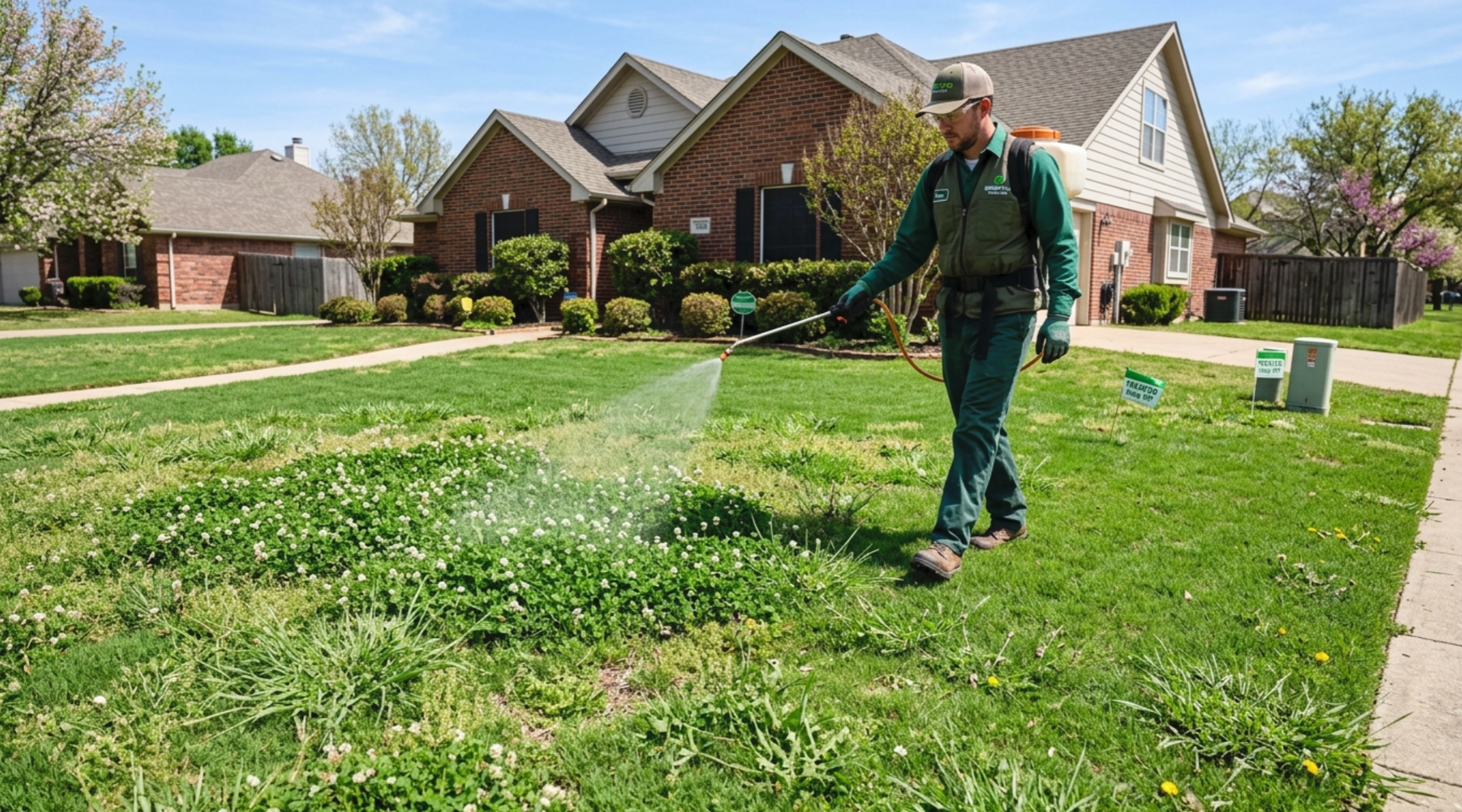
Post-emergent targets weeds that are already visible and actively growing. These products are absorbed through the leaves or root system and are used to kill existing weeds.
Think of post-emergent as the sword.
It is necessary when weeds are already present, when the pre-emergent window was missed, or when a few weeds break through the barrier.
The best lawns use both. Pre-emergent reduces the number of weeds that can emerge, and post-emergent cleans up the stubborn survivors.
To learn more, visit <a href="https://www.ntturfmanagement.com/post/pre-emergent-vs-post-emergent-sherman">pre-emergent vs post-emergent Sherman</a>, <a href="https://www.ntturfmanagement.com/post/post-emergent-herbicide-guide-for-texas-lawns">post-emergent herbicide guide for Texas lawns</a>, and <a href="https://www.ntturfmanagement.com/post/when-to-apply-pre-emergent-in-north-texas-timing-guide">when to apply pre-emergent in North Texas timing guide</a>.
Why timing matters so much
Weed control in North Texas is all about timing. Homeowners often focus on the product itself, but timing is usually the bigger issue.
A pre-emergent applied too late is far less effective. A post-emergent sprayed in the wrong weather may not work properly. Heavy rain, extreme heat, and wind can all reduce effectiveness.
That is why consistent scheduling matters. Weed control is not a one-time event. It is a year-round system.
If you want to understand how weather affects performance, read <a href="https://www.ntturfmanagement.com/post/how-weather-affects-weed-control">how weather affects weed control</a>.
Why store-bought weed control often fails
Many homeowners begin with store-bought sprays, weed-and-feed products, or pump sprayers. That makes sense at first. They are easy to buy and seem less expensive. But they often produce inconsistent results.
Lower potency
Retail products are usually more diluted than professional-grade materials. That can make them less effective on deep-rooted or stubborn weeds common in North Texas.
Generic treatment
Most store-bought options are designed to be broad and simple. They are not tailored to the exact weed type, growth stage, or lawn condition.
Poor timing
Even a decent product will underperform if it is applied too late, too early, or in the wrong conditions.
Weed-and-feed problems
Weed-and-feed sounds convenient, but it often creates a mismatch. The best time to fertilize is not always the best time to kill weeds. If the herbicide does not fully control the weed, the fertilizer can actually help the surviving weed grow back stronger.
Clay soil challenges
Sherman-area clay soil can prevent liquids from absorbing properly, especially if application is uneven or runoff occurs after rainfall.
For more, read <a href="https://www.ntturfmanagement.com/post/store-bought-vs-professional-weed-control">store-bought vs professional weed control</a> and <a href="https://www.ntturfmanagement.com/post/why-weed-control-fails-diy">why weed control fails DIY</a>.
Why professional weed control works better
Professional weed control works better because it treats the lawn as a system, not just a symptom.
A professional program includes:
- Accurate weed identification
- Proper product selection
- Correct timing
- Pre-emergent and post-emergent strategy
- Fertilization to build turf density
- Adjustments based on North Texas soil and weather
That last part matters more than many people realize. Weed control is not just about removing weeds. It is about helping the grass become thick enough that weeds struggle to return.
If you are comparing options, visit <a href="https://www.ntturfmanagement.com/post/is-professional-lawn-care-worth-it-sherman">is professional lawn care worth it Sherman</a> and <a href="https://www.ntturfmanagement.com/post/diy-vs-professional-lawn-care-sherman">DIY vs professional lawn care Sherman</a>.
The role of fertilization in weed control
One of the biggest lawn care mistakes is thinking weed control and fertilization are separate issues. They work together.
Healthy, thick turf is one of the best natural weed defenses available. When the lawn is fed properly and consistently, it fills in weak areas, blocks sunlight from reaching the soil, and leaves less room for weeds to grow.
That is why NTX Turf Management focuses on both <a href="https://www.ntturfmanagement.com/services/weed-control">weed control</a> and <a href="https://www.ntturfmanagement.com/services/fertilization">fertilization</a>. You do not just want weeds gone today. You want a lawn that becomes harder for weeds to invade tomorrow.
You can also read <a href="https://www.ntturfmanagement.com/post/weed-control-and-fertilization-in-texas-the-complete-guide-to-a-healthier-lawn">weed control and fertilization in Texas</a> and <a href="https://www.ntturfmanagement.com/post/lawn-care-program-explained-7-step">lawn care program explained 7 step</a>.
Is weed control safe for pets?
This is a common question for homeowners with dogs or cats. The good news is that professional weed control can absolutely be managed safely around pets when applied correctly.
The key point is drying time. Once the treatment is dry, the lawn is generally safe for normal use again. Granular treatments also need to be watered in and allowed to dry before pets return.
Professional application is often safer than DIY because the product is applied evenly with calibrated equipment, reducing puddling, dripping, and over-application.
For more details, read <a href="https://www.ntturfmanagement.com/post/pet-safe-weed-control-facts">pet-safe weed control facts</a> and <a href="https://www.ntturfmanagement.com/post/pet-friendly-lawn-care-sherman">pet-friendly lawn care Sherman</a>.
What a complete weed control strategy looks like
A complete North Texas weed control strategy usually includes:
1. Pre-emergent applications
These go down before major germination windows to stop as many weeds as possible before they start.
2. Post-emergent treatments
These target visible weeds that are already active or that break through despite prevention.
3. Fertilization
This strengthens the lawn and helps it crowd out future weed growth.
4. Soil-aware planning
Clay soil behaves differently than sandy soil. Good weed control accounts for runoff, compaction, and nutrient availability.
5. Consistency through the year
Weed control is not just a spring service. North Texas lawns benefit from a year-round approach because different weeds emerge in different seasons.
If you want a broader overview of seasonal strategy, read <a href="https://www.ntturfmanagement.com/post/the-complete-north-texas-seasonal-lawn-care-guide-for-sherman-homeowners">the complete North Texas seasonal lawn care guide for Sherman homeowners</a>.
Frequently asked questions about weed control in North Texas
What is the best time to apply pre-emergent in North Texas?
The best timing depends on soil temperature, but in general the first major application window is late winter to early spring, with another important window in fall for cool-season weeds.
Can I skip pre-emergent if I already have weeds?
No. If weeds are already visible, you need post-emergent treatment for the current problem, but you still need pre-emergent to stop the next wave.
Why do weeds come back after mowing?
Because mowing does not kill the root or seed bank. Some weeds may even spread more easily after mowing if seeds are already present.
Is my neighbor’s lawn affecting mine?
It can. Weed seeds are commonly spread by wind, water, animals, and equipment. That is why prevention is so important even if your lawn looks decent now.
How long does it take to get a lawn under control?
For many lawns, it takes a full season of consistent professional care to see major improvement. Weed pressure decreases as the seed bank is reduced and the lawn becomes denser.
Final takeaway
Weed control in North Texas is not just about killing what you see. It is about understanding what is growing in your lawn, stopping new weeds before they sprout, strengthening your grass, and staying consistent through the year.
If you only react to visible weeds, the cycle keeps repeating. But when you combine accurate identification, pre-emergent protection, post-emergent cleanup, and fertilization, you can finally shift the balance in favor of your lawn.
That is how thin, weed-filled lawns become thick, green, and healthy.
If you are ready to stop guessing and start following a proven plan, NTX Turf Management offers professional weed control and fertilization services tailored to Sherman, Denison, and surrounding North Texas lawns. You can request a <a href="https://www.ntturfmanagement.com/lawn-care-estimate">free lawn care estimate</a>, explore all <a href="https://www.ntturfmanagement.com/all-services">services</a>, or learn more about their approach on the <a href="https://www.ntturfmanagement.com">homepage</a>.
Explore other Article
Discover other blogs related to the topic you read.
Ready To Make Your Lawn Look Brand New?
Contact us today to schedule a free estimate for your lawn care or call us to learn more about lawn care for your property